There is still a need for a sociology of the Internet, and my remarks during the session with Robert Basic at the > Barcamp in Mannheim were an attempt to approach the topic of social networks from a different angle.
The thesis:
Exchanges, “teleports,” friend requests, contacts, and the sharing of little hearts—all of this results in documented relationships that reflect a personal culture having nothing to do with the public sphere or public social relationships, because electronic contact is ephemeral, allows one to withdraw at any time, and requires only a minimal degree of responsibility for the new relationship. – Why is a request for contact made? Do we want to expand our own list of acquaintances, or do we want to become better known ourselves? How many contacts can we handle? It’s very easy not to respond to a contact request; the other person isn’t notified. In this kind of game, we allow a third party to regulate our relationship—which isn’t even a relationship yet. This is just one small aspect of an entire network in which not only my contact, but also the network operator and even the network community play a role in shaping how my relationships are organized. When you consider the number of different rules governing forums, the ability to personally initiate contact seems strangely limited.
Do I perceive the other person solely on the basis of the qualities they display? Isn’t a person interesting precisely because they react in a wonderfully individual, incomparable, and unique way in a given situation—something their profile will never capture? People post their profiles online and become strangely anonymous. No social media profile allows for the weighting of personal interests within a profile. Nor is this necessary; after all, the profile takes the same form for everyone—every visitor wants to be able to navigate each page in the same way, in accordance with usability principles. The result is a standardization whose consequences remain unclear.
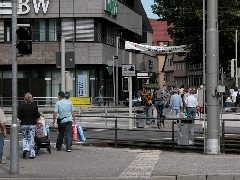 It may be possible to address this problem through architecture or urban planning. Let us consider, in turn, two squares that are intended to serve as spaces for public life. Wilhelmsplatz (I) in Stuttgart-Bad-Cannstatt (> A Site Visit) is the first example. Here, the creation of a public space where people can meet has been a complete failure. It is clear that a multitude of regulations of all kinds confine people’s movements to a restricted area, while other road users have been given their own traffic lanes.

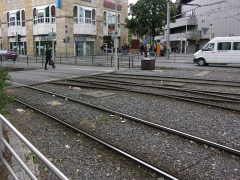
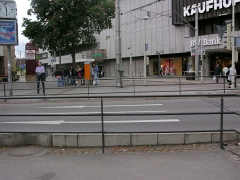
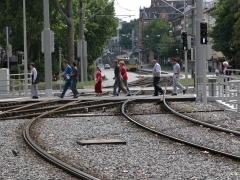
Pedestrians are only tolerated on this square if they are willing to cross it quickly through the pedestrian gates. It is not a place where one can linger. As the center of a neighborhood, it has lost its function.

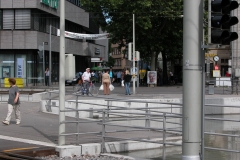
Social media platforms like Facebook and others function in the same way on the Internet. Despite an ever-increasing number of features that offer a multitude of ways to present oneself, the framework for making contact is largely dictated by the designers of these networks—just like in a public square where people must move along predefined paths. What comes to mind when you think of this square? How can passersby reclaim this urban space?
Good question, especially on a weekend like this one, when Ulm residents are visiting the Weishaupt Museum at > Ulm’s Neuer Mitte, > Three new buildings, has been inaugurated.
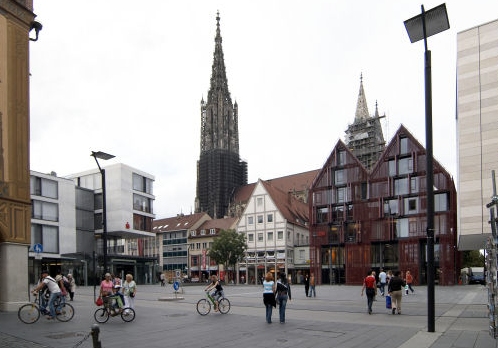
Photo (c) City of Ulm. Courtesy of the City of Ulm.
The new museum is located directly on Hans-and-Sophie-Scholl Square, with which the residents of Ulm have finally and very impressively healed the city’s wartime wounds—wounds that the Neue Straße, between the cathedral and the old town, had until recently still served as a reminder of.
In addition to the obvious advantages offered by social media, their functioning and structure are open to criticism.
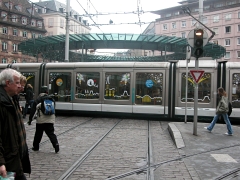
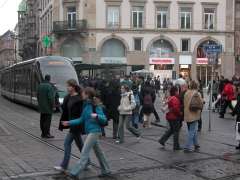
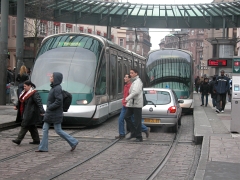
The second example: > Place de l’Homme de Fer in Strasbourg
> Urban Planning and Social Networks in Web 2.0 (I)
> Urban Planning and Social Networks in Web 2.0 (II)
> Urban Planning and Social Networks in Web 2.0 (III)
> Urban Planning and Social Networks in Web 2.0 (IV)
Il manque encore une sociologie de l’Internet, et mes remarques en session avec Robert Basic lors du > Barcamp in Mannheim étaient une tentative d’ouvrir le sujet des réseaux sociaux d’une autre manière.
La thése :
Les échanges, les téléportations, les propositions d’amitié, les contacts et la distribution de petits cœurs, tout cela aboutit à des relations documentées qui reflètent une culture personnelle qui n’a rien à voir avec un public ou des relations sociales publiques, parce que la prise de contact électronique est éphémère, permet de se retirer à tout moment et n’exige qu’un faible degré de responsabilité pour la nouvelle relation. – Pourquoi un souhait de contact est-il exprimé ? Veut-on remplir sa propre liste de connaissances, veut-on soi-même devenir plus connu ? Combien de contacts peut-on supporter ? Ne pas répondre à une demande de contact est très simple, l’autre n’en est pas informé. Dans ce genre de jeu, nous permettons à une tierce instance de régler notre relation, qui n’en est pas encore une. Ce n’est qu’un petit aspect de tout un réseau où non seulement mon contact, mais aussi l’exploitant du réseau et même la communauté du réseau interviennent dans les possibilités d’organisation de mes relations de contact. Si l’on réfléchit au nombre de types de règles qui régissent les forums, la possibilité d’organiser personnellement une prise de contact semble étrangement limitée.
Est-ce que je perçois l’autre uniquement sur la base des qualités qu’il affiche ? Une personne n’est-elle pas justement intéressante parce qu’elle réagit de manière merveilleusement individuelle et incomparable, unique, dans une situation donnée, quelque chose que son profil ne reproduira jamais. Les gens mettent leur profil en ligne et deviennent étrangement anonymes. Aucun profil sur les réseaux sociaux ne permet de pondérer les intérêts personnels dans un profil. Ce n’est d’ailleurs pas nécessaire, le profil donne la même forme pour tous, après tout, chaque visiteur veut pouvoir s’orienter de la même manière sur chaque page, conformément à l’usabilité. Il en résulte une uniformisation dont les conséquences sont encore obscures.
Il est peut-être possible d’aborder ce problème par le biais de l’architecture ou de la planification urbaine. Considérons successivement deux places qui doivent constituer l’espace de la vie publique. La Wihelmsplatz (I) à Stuttgart-Bad-Cannstatt (> Eine Ortsbesichtigung) iest le premier exemple. Ici, la création d’un espace public permettant aux gens de se rencontrer a été un véritable échec. Il est évident qu’une multitude de réglementations de toutes sortes réduisent les trajets des personnes à un espace restreint, alors que les autres usagers de la route ont obtenu leurs propres espaces de circulation.
Les piétons ne sont tolérés sur cette place que dans la mesure où ils sont prêts à la traverser rapidement entre les grilles de passage. Ce n’est pas un lieu où l’on peut s’attarder. En tant que centre d’un quartier, elle a perdu sa fonction.
Les réseaux sociaux comme Facebook et autres fonctionnent de la même manière sur Internet. Malgré un nombre toujours plus grand de fonctions qui offrent une multitude de possibilités pour se présenter, le schéma de la prise de contact est largement imposé par les concepteurs de ces réseaux, exactement comme sur une place où les gens doivent se déplacer selon des trajectoires prédéfinies. Qu’est-ce qui vient à l’esprit sur cette place ? Comment les passants pourront-ils se réapproprier cet espace urbain ?
Bonne question, surtout un week-end comme celui-ci, où les habitants d’Ulm visitent le musée Weishaupt à > Ulms Neuer Mitte, > Drei neue Gebäude, a été inauguré.
Photo (c) Ville d’Ulm. Avec l’aimable autorisation de la ville d’Ulm.
Le nouveau musée se trouve directement sur la place Hans-et-Sophie-Scholl, avec laquelle les habitants d’Ulm ont enfin refermé de manière très impressionnante les blessures de guerre de la ville, que la Neue Straße rappelait encore récemment, entre la cathédrale et la vieille ville.
Outre les avantages évidents qu’offrent les réseaux sociaux, leur fonctionnement et leur structure peuvent être critiqués.
Le deuxième exemple : > La Place de l’Homme de fer in Straßburg
> Stadtplanung und soziale Netzwerke im Web 2.0 (I)
> Stadtplanung und soziale Netzwerke im Web 2.0 (II)
> Stadtplanung und soziale Netzwerke im Web 2.0 (III)
> Stadtplanung und soziale Netzwerke im Web 2.0 (IV)
Eine Soziologie des Internets fehlt noch, und meine Bemerkungen in Session mit Robert Basic auf dem > Barcamp in Mannheim waren ein Versuch, das Thema Soziale Netzwerke mal auf eine andere Art zu öffnen.
Die These:
Kuscheln, anbeamen, Freundschaften vorschlagen, Kontakte knüpfen und Herzchen verteilen, dies alles führt zu dokumentierten Beziehungen spiegelt eine persönliche Kultur vor, die mit einer Öffentlichkeit oder öffentlichen sozialen Beziehungen nichts zu tun haben, weil die elektronische Kontaktaufnahme flüchtig ist, jederzeit einen Rückzug bietet und nur wenig Maß an Verantwortung für die neue Beziehung erfordert. – Warum wird ein Kontaktwunsch geäußert? Will man seine eigene Liste der der Bekannten auffüllen, will man selbst bekannter werden? Wie viele Kontakte verkraftet man? Einem Kontaktwunsch nicht zu entsprechen ist ganz einfach, dem Gegenüber wird das nicht mitgeteilt. Wir erlauben bei dieser Art von Spielchen, dass eine dritte Instanz, unser Verhältnis, das noch gar keines ist, regelt. Das ist nur ein kleiner Teilaspekt in einem ganzen Netzwerk, wo nicht nur mein Kontakt, sondern der Betreiber des Netzwerks und sogar die Netzwerk-Gemeinschaft in die Gestaltungsmöglichkeiten meiner Kontaktverhältnisse eingreift. Überlegt man wie viele Arten von Regeln die Foren bestimmen, erscheint der persönliche Gestaltbarkeit einer Kontaktanbahnung merkwürdig stark eingeengt.
Nehme ich den Gegenüber nur aufgrund seiner von ihm angezeigten Qualitäten wahr? Ist nicht eine Person gerade deshalb so interessant, weil sie in einer bestimmten Situation so wunderbar individuell und unverwechselbar, einmalig reagiert, etwas das ihr Profil nie wiedergeben wird. Die Menschen stellen ihr Profil ins Netz und werden dabei seltsam anonym. Kein Profil in sozialen Netzwerken erlaubt eine Gewichtung der persönlichen Interessen in einem Profil. Ist auch nicht nötig, das Profil gibt für alle die gleiche Form, schließlich will sich jeder Besucher gerne usability-gerecht auf jeder Seite gleich gut zurechtfinden. Was dabei herauskommt ist eine Uniformisierung, deren Folgen noch im Dunkeln liegen.
Vielleicht kann man sich diesem Problem auf dem Umweg über die Stadtarchitektur oder -planung annähern. Betrachten wir nacheinander zwei Plätze, die den Raum für öffentliches Leben bilden sollen. Der Wihelmsplatz (I) in Stuttgart-Bad-Cannstatt (> Eine Ortsbesichtigung) ist das erste Beispiel. Hier ist es gründlich misslungen, einen öffentlichen Raum für die Begegnung von Menschen zu schaffen. Offenkundig engen eine Vielzahl von Vorschriften jeder Art die Wege der Menschen auf einen engen Raum ein, während die anderen Verkehrsteilnehmer ihre eigenen Verkehrsräume erhalten haben.
Die Fußgänger werden auf diesem Platz nur insoweit geduldet, wie sie ihn zwischen den Laufgittern schnell zu überqueren bereit sind. Es ist kein Platz zum Verweilen. Als Zentrum eines Ortsteils hat er seine Funktion verloren.
In ähnlicher Weise funktionieren die sozialen Netzwerke wie Facebook u.a. im Internet. Trotz einer immer größeren Fülle von Funktionen, die für die Selbstdarstellung eine Vielzahl von Möglichkeiten anbieten, ist das Schema der Kontaktaufnahme durch die Gestalter dieser Netzwerke weitgehend vorgeschrieben, eben so wie auf einem Platz, auf dem die Menschen in vorbestimmten Bahnen sich bewegen müssen. Was einem auf diesem Platz einfällt? Wie werden die Passanten diesen Stadtraum wieder für sich zurückerobern können?
Gute Frage, gerade an so einem Wochenende, an dem die Ulmer Bürger das Museum Weishaupt in > Ulms Neuer Mitte, > Drei neue Gebäude, eingeweiht haben.
Foto (c) Stadt Ulm. Mit freundlicher Genehmigung der Stadt Ulm.
Das neue Museum liegt direkt an dem Hans-und-Sophie-Scholl-Platz, mit dem die Ulmer in sehr beeindruckender Weise die Kriegswunden der Stadt, an die die Neue Straße noch bis vor kurzem erinnerte, zwischen Münster und Altstadt endlich wieder geschlossen haben.
Abgesehen von dem offensichtlichen Nutzen, die soziale Netzwerke unbestreitbar bieten, darf dennoch, die Funktion und der Aufbau dieser Angebote kritisch hinterfragt werden.
Zum zweiten Beispiel: > La Place de l’Homme de fer in Straßburg
> Stadtplanung und soziale Netzwerke im Web 2.0 (I)
> Stadtplanung und soziale Netzwerke im Web 2.0 (II)
> Stadtplanung und soziale Netzwerke im Web 2.0 (III)
> Stadtplanung und soziale Netzwerke im Web 2.0 (IV)



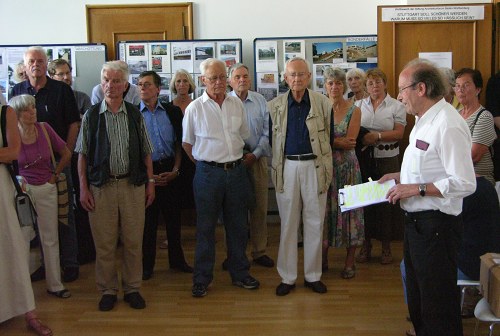
 Aus Anlaß des 80. Geburtstages der Weißenhofsiedlung hat Professor Max Bächer (1925-2011) am Montag, 23. Juli 2007, auf Einladung des Architekturforums einen Vortrag gehalten. Professor Roland Ostertag begrüßte den Gast. Aus der Ankündigung der Veranstaltung: „Vor genau 80 Jahren, am Samstag, den 23. Juli 1927, wurde die Weißenhof-Siedlung eröffnet. Die historische Bedeutung dieser Siedlung liegt darin, dass sich hier in Stuttgart zum ersten Mal an einem Ort das Neue Bauen als eine weltweite übergreifende Bewegung darstellte. Roland Ostertag bemüht sich seit Jahrzehnten um die Weißenhof-Siedlung und plädiert für die Gründung einer Stiftung und die offizielle Eintragung als Weltkulturerbe.
 Für Max Bächer gehört der Weißenhof zu seinen dauerhaften Lebenserinnerungen, über die er erzählen wird. Max Bächer, geboren 1925, aufgewachsen in der Marienstraße zwischen

 Anläßlich der Frage, ob es schon die versprochene Stiftung zugunsten der Weißenhofsiedlung gibt, gab Max Bächer seine Kritik an Stuttgart 21 zu Protokoll und spielte auf die Unsumme des Projekts und die langen Tunnelfahrten an, die den Reisenden mit diesem Projekt zugemutet werden.


 „Vor genau 80 Jahren, am Samstag, den 23. Juli 1927, wurde die Weißenhof-Siedlung eröffnet. Die historische Bedeutung dieser Siedlung liegt darin, dass sich hier in Stuttgart zum ersten Mal an einem Ort das Neue Bauen als eine weltweite übergreifende Bewegung darstellte. Roland Ostertag bemüht sich seit Jahrzehnten um die Weißenhof-Siedlung und plädiert für die Gründung einer Stiftung und die offizielle Eintragung als Weltkulturerbe. Für Max Bächer gehört der Weißenhof zu seinen dauerhaften Lebenserinnerungen, über die er erzählen wird. Max Bächer, geboren 1925, aufgewachsen in der Marienstraße zwischen Wilhelmsbau und Silberburg, Notabitur, Soldat, schwer verwundet, ist von 1946 bis heute ein Student der Architektur geblieben. Er arbeitete bei Bodo Rasch und Paul Stohrer, machte sich 1956 selbständig und wurde 1963 Lehrer an der TH Darmstadt. Im offenen Haus von Prof. Hans Hildebrandt, der als Pionier der Moderne 1933 seinen Lehrstuhl an der TH Stuttgart verloren hatte, lernte er Richard Döcker, Alfred Roth, Walter Gropius, Adolf G. Schneck, Max Bill und viele der damaligen Avantgarde, die auch an der Weißenhof-Siedlung beteiligt waren, kennen.“